In the blistering heat of the West Valley, the decision to upgrade your home security often brings you to a crossroads: stick with the traditional mechanical deadbolt that has worked for a century, or embrace the modern convenience of smart locks? As homeowners in Glendale, Peoria, and Surprise increasingly look to automate their lives, this question is becoming the most common inquiry we receive. Smart locks offer undeniable benefits like remote access and keyless entry, but they also introduce vulnerabilities related to battery life in high temperatures and potential connectivity issues caused by stucco construction. If you are trying to decide if this technology is right for your home, you need advice that comes not just from a sales brochure, but from certified professionals who understand the mechanics of security.
At West Valley Lock & Key, we believe that the person installing your lock is just as important as the lock itself. In an industry unfortunately filled with unlicensed “handymen,” we prioritize genuine expertise and professional development through the Associated Locksmiths of America (ALOA). Understanding the alphabet soup of certifications can help you see why our advice holds weight. We don’t just guess; our team includes technicians progressing through rigorous standards, from the ALOA Fundamental Locksmith (AFL) level—perfect for our apprentices mastering the basics—up to the Registered Locksmith (RL) and Certified Registered Locksmith (CRL) designations. A CRL has passed mandatory exams and electives proving they understand the intricate geometry of a door frame, not just how to use a screwdriver. This depth of knowledge is critical when discussing smart locks, as a digital device is only as secure as the physical installation behind it.
The Professional Difference: Why Certifications Matter in Security
When you are trusting a device to protect your family, “good enough” installation isn’t acceptable. Many of the failure points we see with smart locks—like motors burning out or deadbolts jamming—are actually installation errors that a trained eye would prevent. This is where the hierarchy of professional locksmithing comes into play. A Certified Professional Locksmith (CPL) has moved beyond the initial certification to demonstrate intermediate-level mastery, ensuring they can handle complex residential retrofits where a door might need significant adjustment to accept electronic hardware. At the top tier, a Certified Master Locksmith (CML) represents the advanced pinnacle of general locksmithing knowledge, capable of solving the most unique architectural challenges.
Why do we mention this? Because when we discuss the “pros and cons” of smart locks, we are filtering that information through the lens of this training. We aren’t just reading a spec sheet; we are applying the standards of a Certified Registered Locksmith (CRL) to ensure that if you do choose a smart lock, it provides actual security, not just the illusion of it. Whether you need a simple lock rekey to match your new electronic keypad to your old keys, or a full smart lock installation, our certified approach ensures longevity and reliability.
| Issue | Certified Locksmith Solution (CRL/CPL) | DIY/Handyman Risk |
|---|---|---|
| Door Alignment | Adjusts hinges/strike for zero friction | Forces lock / Burns motor |
| Security Mounting | Uses 3-inch anchor screws | Uses short factory trim screws |
| Heat Management | Recommends heat-resistant models | Installs melt-prone plastic models |
| Power Failure | Keys override cylinder to existing house key | No backup plan / Lockout |
The Major Advantages: Control and Integration
The primary argument for smart locks is “Access Control,” a concept usually reserved for commercial buildings but now available for your front door. With a traditional lock, if you lose a key, your security is compromised until you call us for a lock change. With a smart lock, you simply revoke the digital credential. This is a massive advantage for busy families or those with service personnel (housekeepers, dog walkers) entering the home. You can audit exactly who entered and when, providing a digital paper trail that a brass key can never offer.
Furthermore, integration with home automation is a game-changer. If you have a Z-Wave or Zigbee home hub, your lock becomes part of the ecosystem. We can install systems where unlocking the door triggers the hallway lights and adjusts the thermostat—features that add real value to your daily life. If you are unsure about compatibility, our residential locksmith services team can assess your current smart home setup and recommend the hardware that speaks the same language.
The Cons: The Arizona Heat Factor
We have to be honest about the environment we live in. Electronics and 115-degree heat are not natural friends. In the West Valley, we see smart locks fail more often than in cooler climates because the heat increases the internal resistance of batteries, causing them to drain faster or fail unexpectedly. A Certified Professional Locksmith (CPL) knows to recommend specific brands that use separate battery compartments or higher-grade materials that resist warping. We often steer clients away from touchscreens that face directly West, as the sun can craze the plastic and make the digits unreadable.
Another significant “con” is the reliance on proper door alignment. A mechanical deadbolt is forgiving; you can push the door with your shoulder while turning the key to get it to lock. A smart lock motor is weak. If it encounters resistance (what we call “bolt binding”), it will try a few times and then jam, leaving your home unlocked and draining the battery. This is why we perform a comprehensive door adjustment as part of every installation, ensuring the bolt glides freely.
Specialized Expertise: Beyond the Front Door
The world of smart locks isn’t limited to your front door deadbolt. As vehicles become more computerized, the line between residential and automotive security blurs. This is where the Certified Automotive Locksmith (CAL) specialization comes in. Just as your home uses digital credentials, your car uses transponders. Our team members with CAL training understand the digital handshake between a key and a computer, whether it’s on a Ford F-150 or a Schlage Encode. If you find yourself needing car key programming or are stuck in a car lockout, the same principles of digital security apply.
On the commercial side, we often deploy more robust electronic access control. While a residential smart lock is great for a house, a business needs hardware rated for thousands of cycles a day. For clients with safes or vaults, we rely on the expertise of a Certified Professional SafeTech (CPS) or a Certified Master SafeTech (CMST). These specialists understand that drilling into a high-security electronic safe lock is vastly different from installing a residential keypad. If your business requires this level of security, or if you need to establish a hierarchy of access, we highly recommend exploring our master key systems. A master key system allows you to retain physical override keys (crucial if the electronics fail) while managing daily access efficiently.
Installation: The Certified Difference
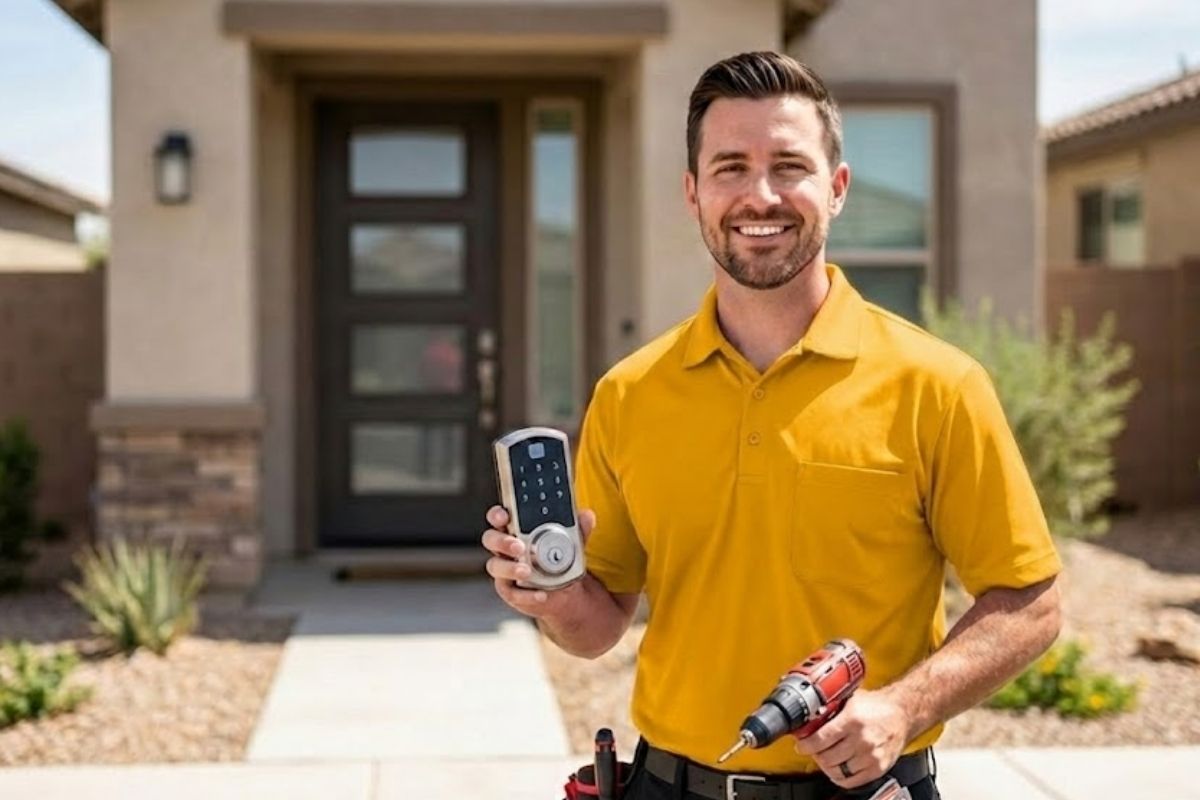
Many homeowners attempt to install these devices themselves, only to call us a month later when the lock starts beeping incessantly or refuses to latch. The difference between a DIY install and one performed by a Certified Registered Locksmith (CRL) is in the details. We don’t just screw the lock to the door. We check the depth of the mortise in the frame. We replace the standard 1-inch screws in the strike plate with 3-inch hardened steel screws that bite into the structural stud, drastically improving kick-in resistance.
We also verify that the “handing” of the lock is correct (telling the lock which way is left or right), a step often skipped in DIY manuals that leads to the lock operating in reverse. Whether it’s a deadbolt installation or setting up a new keypad lock, we ensure the device is mechanically sound before we ever put the batteries in.
Security vs. Convenience: The Final Verdict
Are smart locks safe? Yes, provided they are high-quality units installed correctly. The encryption used in modern locks is similar to online banking; it is very difficult to hack. The real vulnerability is usually the physical door frame or a poor installation. A Certified Master Locksmith (CML) will tell you that a lock is only as strong as the strike plate it engages with. By combining a smart lock with a reinforced strike plate and a properly adjusted door, you gain convenience without sacrificing security.
However, we always recommend a “Plan B.” We strongly advise against locks that only use a touchscreen. Always choose a model with a mechanical keyway override. In the event of a total electronic failure—say, a circuit board melts in a Surprise heatwave—you need a physical key to enter. We can rekey this override cylinder to match your existing house key, keeping your keychain simple.
Comprehensive Security Services
Our expertise extends to every access point of your life. While we are discussing smart locks, don’t forget the other areas that need protection. We handle mailbox lock replacement for those communal cluster boxes, file cabinet locks for securing sensitive home office documents, and lock repair for vintage hardware you want to preserve. If you have a vacation rental, we can install a lock box as a backup for your guests.
For our commercial clients, we offer robust commercial locksmith services, including high-security locks that are pick-resistant and bump-proof. We can integrate these with access control panels to give you a complete view of your building’s security posture. Remember, a master key system is often the best backbone for any commercial security strategy, providing a fail-safe that purely electronic systems sometimes lack.
Why Choose West Valley Lock & Key?
In a market flooded with scammers and unqualified technicians, our commitment to the ALOA certification path sets us apart. When you hire us, you aren’t getting a random person with a drill; you are getting a professional who has likely achieved or is working toward designations like CRL, CPL, or CAL. We take pride in our ongoing education because it translates directly to your safety. We know the difference between a lock that looks secure and one that is secure.
We are local, we are certified, and we are ready to help you navigate the pros and cons of modern security. Whether you are dealing with an emergency lockout or planning a full security upgrade, trust the team that invests in expertise.
What does ALOA Certified mean for my lock installation?
Will a smart lock survive the Arizona summer?
Can I rekey a smart lock to my old keys?
Do I need a Certified Automotive Locksmith for car keypads?
Why is my smart lock jamming?
Conclusion
Deciding to install smart locks is a significant step toward modernizing your home, but it requires a realistic understanding of the technology's limits in our desert climate. By weighing the convenience of app-based access against the maintenance needs of batteries and firmware, you can make an informed choice. However, the most critical factor remains the quality of the installation.
Don't risk your home's security with a DIY guess or an uncertified handyman. Contact West Valley Lock & Key today to discuss your options with a certified professional who understands the unique challenges of the West Valley. We will help you find the perfect balance of security and convenience.
Visit our local listing to see our service area and check our credentials: https://share.google/6L7OGhxyCcfG1OTsW